
Chapel Bridge in Lucerne: understand the crossing
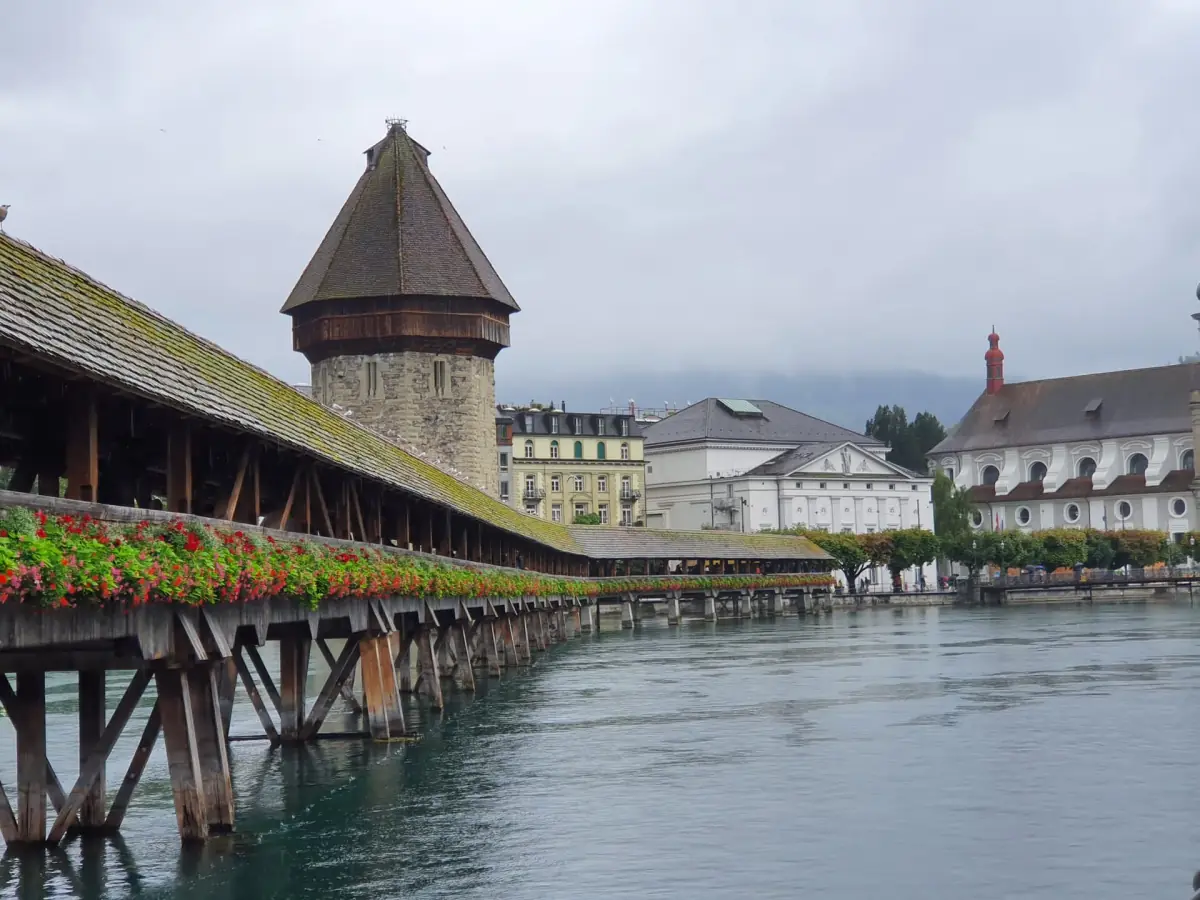
Chapel Bridge in Lucerne crosses the Reuss from the theatre on the south bank, past the Water Tower, towards the Peterskapelle area at Rathausquai. Use those endpoints to place it within a city walk. Looking at the crossing from a riverbank and looking at its timber structure answer different questions: one shows how it connects the city, while the other brings the paintings and the reconstructed sections into focus.
The bridge is part of a larger riverside visit, rather than an isolated attraction that requires its own city-wide itinerary. Link it with the Old Town squares and walking route, then decide whether to continue downstream towards the Spreuer Bridge. Keep the Water Tower’s exterior and any organised visit separate in your plans; the tower’s age alone does not establish arrangements for entering it.
The fire of 1993 and the reconstructed bridge
The fire took place during the night leading into 18 August 1993. The reconstructed section reopened on 14 April 1994, after about eight months. These dates matter when looking at the bridge today: its appearance brings together a historic crossing and substantial reconstruction. Describing the whole structure as an untouched medieval original would miss the event that shaped the present visit.
Look at the relationship between the wooden crossing and the Water Tower before focusing on individual details. A photograph of the complete bridge can suggest continuity, but the fire and reopening explain why the visible structure needs a more careful reading. For the wider sequence of bridges, church building, memorial and wall restoration, see Lucerne history. This page keeps the focus on the bridge itself and what its surviving and reconstructed fabric mean.
A walk with tastings
This guided visit includes Chapel Bridge and the Water Tower alongside tastings.
Hand-picked tours, booked through GetYourGuide. Prices are indicative starting prices in Swiss francs (as of October 2026). Tap a tour for live availability and the current price in your currency.
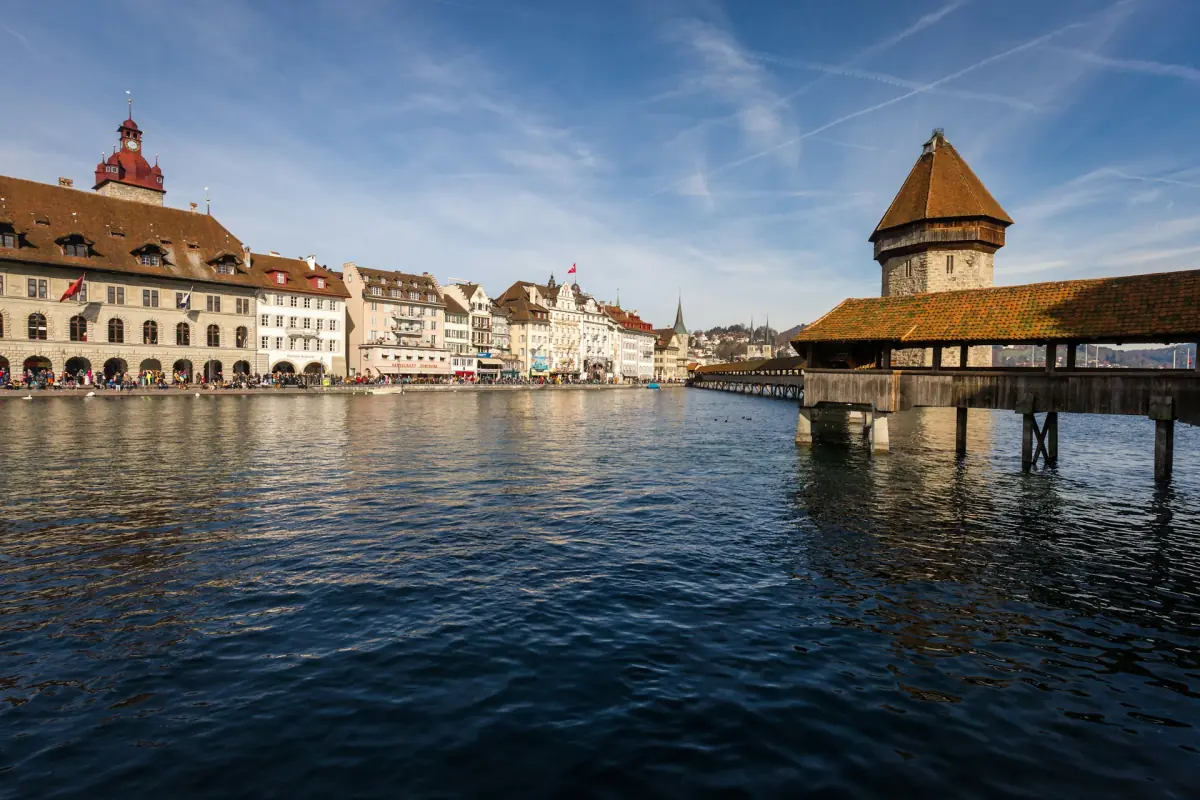
See the bridge on a guided tasting walk
This city walk pairs its Chapel Bridge and Water Tower visit with chocolate, Alpine cheese and a drink; a lake cruise requires the boat option.
Paintings: different counts describe different collections
The painting cycle needs particular care with numbers. There were originally 158 pictures, of which 147 survived before the fire. At the time of the fire, 110 were on the bridge. About two thirds of that group were destroyed or badly damaged. These figures refer to different stages and groups; the original total is not a count of paintings available to see on the bridge today.
For a visit, the useful distinction is between the historic cycle and the losses caused by the fire. Avoid turning the original number into a checklist of pictures to find during a crossing. Spend time considering the paintings as part of the timber structure, then put the fire date alongside what you see. The story is one of survival, damage and reconstruction rather than a single unchanged collection.
Water Tower and Spreuer Bridge compared
The Water Tower dates approximately from 1290 to 1300 and is older than Chapel Bridge. That relationship is useful to keep in mind from the riverbank: the tower and wooden crossing belong to the same familiar view, yet their building histories are different. Plan around seeing the tower beside the bridge and treat any organised tower component according to its actual included services.
Downstream, the Spreuer Bridge provides another Reuss crossing. Its recorded construction date is 1408, and its name refers to the chaff from the city mills that was thrown into the river here. Including both bridges gives a city walk a clear river-based structure. It also lets you compare the crossings without needing to assume that their dates, paintings or access arrangements are identical.
A guided walk with cheese and chocolate
The guided tasting walk linked to this page includes a guide, five Swiss chocolate samples, three types of Alpine cheese and a glass of Swiss wine or a non-alcoholic drink. Its included services also name a Chapel Bridge and Water Tower visit, a castle visit and a lift ticket. The starting point is the archway at Bahnhofplatz in Lucerne. Hotel pickup and drop-off are excluded.
This is a city experience with tastings, rather than a general public admission ticket to the Water Tower. A one-hour lake cruise is included only with the selected boat option. Choose it if the food component and guided city visit fit your interests; compare the wider chocolate and cheese experiences if tasting is your priority. For a walk centred on the city, see guided walking tours.
Questions about your visit
Is the bridge entirely an original historic structure?
The present bridge includes the reconstructed section reopened on 14 April 1994 after the fire of 18 August 1993.
Is the Water Tower older than the bridge?
The tower dates approximately from 1290 to 1300 and is older than Chapel Bridge. Its building history and arrangements for an interior visit are separate matters.
Does the tasting walk include a cruise?
A one-hour lake cruise belongs only to the selected boat option. The city walk itself includes the guide, specified tastings and named visits.